
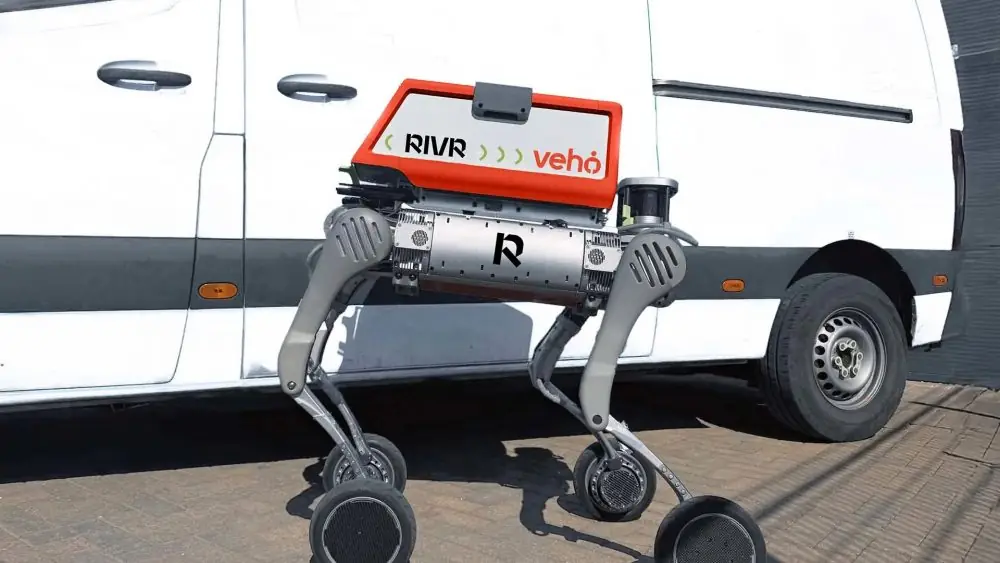
A robot is about to change how your online orders show up at your door. No, it’s not a drone and not even a self-driving van. It’s a robot dog on wheels. These machines are already roaming the streets of Austin, Texas, carrying real packages to real homes.
Built by Zurich-based robotics startup Rivr and deployed with delivery company Veho, these four-legged bots are being trained to take over the “last 100 yards” of delivery, the hardest, most unpredictable stretch between a van and your doorstep.
They are fast, smart, and built to handle real-world chaos like stairs, bumpy sidewalks, and closed gates.
Rivr calls it the Rivr One. It has four jointed legs, each with wheels, giving it ten times more range than typical legged robots and double the speed of walking humans. Think of it like a dog on roller skates. A dog that doesn’t bark but shows up with your package and never gets tired.
This robot is packed with sensors, cameras, LiDAR, and onboard computing that let it map and understand the world around it. It can navigate streets, avoid obstacles, and even open gates with a robotic arm. All by itself. But when things go sideways, human operators are standing by, ready to jump in remotely.
The Austin pilot is still early. Right now, there is just one robot doing five to six-hour shifts a day, sticking to neighborhoods and less crowded areas. The robot works alongside human drivers. The van pulls up, the bot grabs a package, and off it goes to the door, climbing steps, dodging planters, and slipping through gates.
The Dog Robot Is Self-Training!
The crazy part is that it is training itself. One big problem in robotics is data. Unlike AI chatbots that can train on books and web pages, physical robots need real-world experience. You can’t fake stairs or dogs barking or a kid’s toy on the sidewalk. Rivr’s bots are learning on the job, collecting every bump, pause, and reroute to improve future performance.
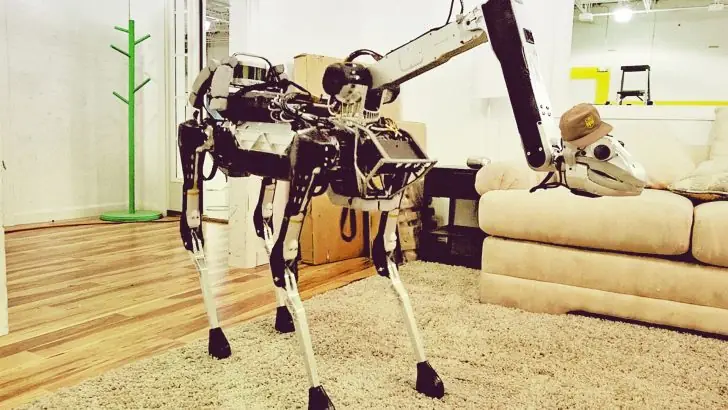
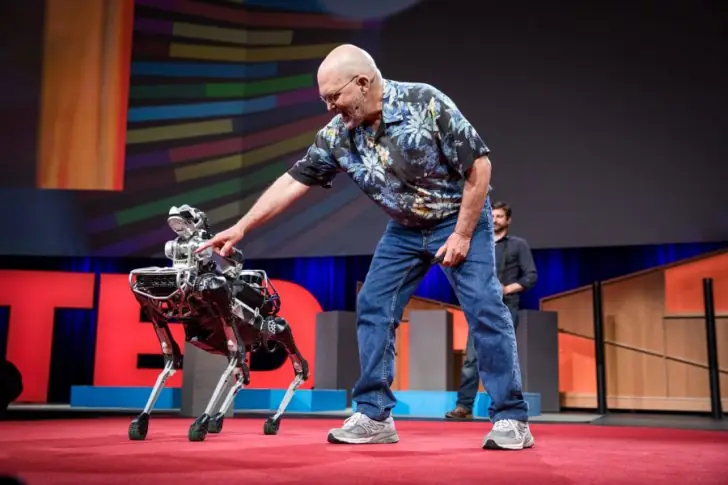
This is what gives Rivr an edge. Boston Dynamics has its robot Spot, which is famous for dance videos and factory work. Starship has its rolling coolers that cross college campuses. But Rivr’s robot is not trying to replace humans. It is a tag-team partner, handing off the annoying part of delivery so people can handle the rest.
The company wants 100 robots in the field by 2026, then thousands the year after. And they are not stopping with Austin. A trial in Barnsley, UK, kicks off in summer 2025 with delivery firm Evri. The robot dogs will assist couriers across town, tackling rain, curbs, and unpredictable British weather.
The arm can place packages where they belong, not just drop them. And the system is smart and adaptable. If something goes wrong, the bot phones home for help.
Veho, the delivery company involved in the Austin pilot, sees these robots as the future of e-commerce logistics. Faster drop-offs, lower costs, and fewer lost packages. More precision, more reliability.
This doesn’t mean delivery workers are going extinct. The robot is not stealing jobs. It is doing the boring part, the part that eats up time and wears people down.