
Technology has been rapidly evolving, leading to significant advancements in the display industry. One of these innovations is electroluminescent quantum dots technology (EQLD), which can take display quality to a new level while requiring less energy.
This article provides a comprehensive outline of EQLD, discusses its benefits, works, applications, and possible impact on augmented reality, and when we can expect screen manufacturers to adopt this revolutionary technology.
Introduction to Electroluminescent Quantum Dots Technology

EQLD technology is based on the principles of quantum dots (QDs), tiny crystals emitting light when exposed to electric current. EQLD improves upon this technology by bringing electroluminescent properties to the quantum dots, allowing them to emit light independently without needing a backlight, making displays thinner and more energy-efficient.
This technology creates brighter colors, deeper blacks, and an increased dynamic range, leading to more vivid and lifelike visual displays. At CES 2023, Nanosys demonstrated some exciting developments in EQLD technology. They showcased new screens featuring EQLD that are thinner and more energy-efficient, have better color accuracy, and have a higher image contrast ratio than current displays.
With these new features, EQLD displays offer an experience like never before, and it’s only a matter of time before this technology becomes the norm in the display industry.
How It Works
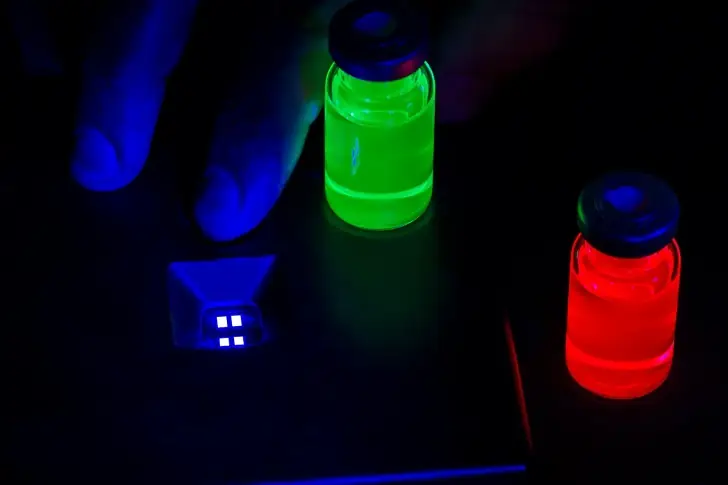
EQLD technology uses a voltage applied across the quantum dots, causing them to emit light in a specific color that can be controlled precisely. By adding the electroluminescent properties to the quantum dots, the technology eliminates the need for backlighting, resulting in thinner displays, lower power consumption, and higher visual quality.
Applications
This technology has multiple applications in displays of different sizes, including smartphones, televisions, and computer screens, to name a few. The high visual quality, energy-saving properties and thinness of EQLD displays make it an excellent option for various industries, including the entertainment industry, healthcare industry, gaming industry, and more.
Impacts of This Technology
The possible impact of EQLD on augmented reality is noteworthy as well. EQLD displays could become the standard for AR glasses, providing crisp and vivid images on a wearable display. This could significantly improve the AR experience, taking it to the next level and unlocking new possibilities in different fields.

Screen manufacturers are already working on display prototypes that use EQLD technology. Based on various factors, including manufacturing costs, demand, and more, EQLD could become mainstream within the next five years. Experts believe that by 2025, screen manufacturers could start using EQLD displays as the standard technology for high-quality, energy-efficient displays.
Conclusion
In conclusion, EQLD technology is revolutionizing the display industry by offering a more visually stunning, energy-efficient, and thinner display option. As we’ve discussed, this technology has multiple benefits, works by using quantum dots that emit light on their own, has applications in various display sizes, has the potential to transform AR, and could become mainstream in the next five years. We’re excited to see where this technology takes the display industry and how it will shape our experiences in the not-so-distant future.