
In a world where WhatsApp, WeChat, and other texting apps reign supreme, Americans have a peculiar attachment to a seemingly outdated technology: SMS. While the rest of the globe chats away on messaging apps, Americans remain firmly ensconced in their SMS bubble.
This distinctive American affinity for SMS has its merits and drawbacks. In this article, we’ll delve into why SMS still holds its ground in the United States despite the allure of more advanced messaging platforms.
The SMS Exception in America
SMS, or Short Message Service, traces its origins back to the 1980s. It’s a text messaging technology that operates over cellular networks and has remained a standard method of communication in the United States.
In contrast, many other countries have transitioned to smartphone apps like WhatsApp (owned by Meta, formerly Facebook), WeChat (popular in China), and Line (widely used in Japan) for text messaging. These apps facilitate messages traveling over the internet, offering features that SMS can’t match.

Pros and Cons of SMS
The enduring popularity of SMS in the United States highlights its resilience. It functions on nearly any phone, ensuring compatibility across devices and brands. Unlike users of some chat apps, Americans are not locked into a specific company’s communication ecosystem.
However, SMS does have its drawbacks. Security vulnerabilities plague it and lack the modern features in messaging apps, such as read receipts and the ability to initiate video calls directly from a text. This SMS exceptionalism serves as a reminder that the most enduring technologies are not necessarily the best ones. It also underscores how American smartphone habits differ from the rest of the world’s, for better or worse.
Understanding the American Messaging Landscape
If you’re an American iPhone user, you likely utilize iMessage, which operates over the internet—unless your recipient uses an Android device, in which case your messages revert to SMS. The situation is more complicated for Android users, but SMS remains a predominant mode of communication.
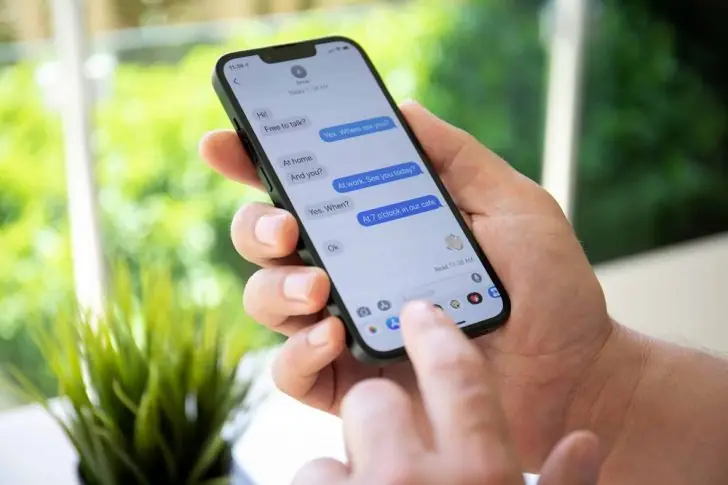
The sheer volume of SMS usage in the U.S. sets it apart from most other nations. For instance, in 2020, roughly one trillion personal and commercial messages traveled via SMS or its image counterpart, MMS, within the U.S. In Germany, a country with a similar population size, this figure stood at a mere eight billion, according to Strategy Analytics, a mobile research firm.
The Downsides of SMS
Why is America’s continued reliance on SMS a matter of concern? Put, SMS is an ageing technology forced into a modern world. Contemporary texting apps like WeChat, WhatsApp, and Signal allow users to see which contacts are online, send high-definition images and animations, share real-time locations, and interact with various apps directly within conversations—tasks that SMS struggles to accommodate.
Moreover, SMS falls short in terms of security. Recent WhatsApp commercials have emphasized SMS’s vulnerability to eavesdropping and cybercriminals. WhatsApp and similar apps employ encryption technology to safeguard messages from prying eyes, a feature that draws both praise and criticism for potentially obstructing law enforcement investigations.
The Beauty of SMS
Despite its limitations, SMS possesses a simple beauty. It serves as a universal bridge between different devices and operating systems. Proposing the adoption of a single Big Tech company’s app as the gateway to our digital communications seems unsettling to many.
Nitesh Patel, the director of wireless media research at Strategy Analytics, suggests a middle ground in the form of RCS (Rich Communications Services), a more advanced cousin of SMS.
RCS offers modern features and robust security while remaining a shared technology without a single corporate overlord. Google has championed RCS and replaced SMS on some Android devices. However, Apple’s likely reluctance to adopt RCS means it will never become a universal messaging technology.