If you were to time travel back over a million years ago, the sight awaiting you might be vastly different from the expected prehistoric vision of Europe. Rather than watching early humans painting intricate designs on cave walls or hunting on grassy plains, you would be met with an expansive, frigid wilderness.
This stark reality emerged from new scientific findings. Thus, shedding light on a monumental climatic event that reshaped our ancestors’ destiny in Europe.
While history has taught us that our early ancestors comfortably resided in Europe for a staggering 1.5 million years, new findings have flipped that narrative on its head. Now, we are being introduced to an era where a drastic temperature nosedive led to a mass exodus of early humans from Europe, lasting an astounding 200,000 years.
The Sudden Frost That Rewrote History
Piecing together this chilly puzzle, researchers scoured ocean sediment data from 1.1 million years ago. Their startling discovery? A sharp decline in temperature, to the tune of 5°C or more. This dramatic shift would have transfigured the environment in the blink of an eye.
Familiar rivers turned to sheets of ice, and once-lush grasslands were blanketed by thick snow. And the wildlife our ancestors depended on for survival either vanished or migrated in search of warmth. Picture our early ancestors: With their rudimentary tools and limited clothing, waking up to such a world.
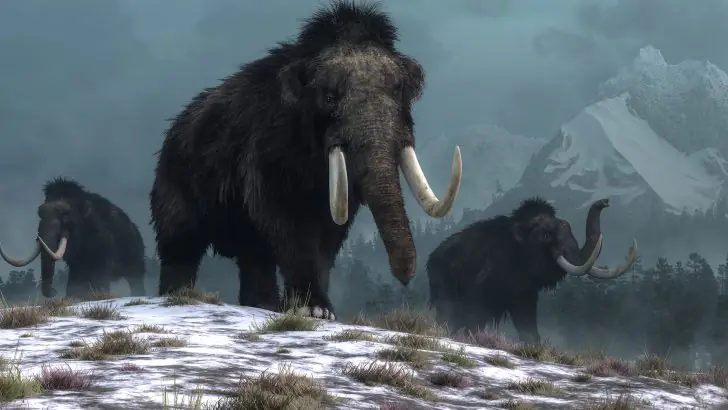
With the icy wind howling and their traditional sources of food scarce, staying put was simply not an option. The brutal cold was an adversary against which they had no defense.
Setting Foot on New Frontiers
Faced with the daunting task of survival, our predecessors did what humans do best: Adapt. Moving away from the icy grasp of Europe, they likely ventured to warmer parts of Africa or Asia. These lands, while hospitable in terms of climate, brought forth their own set of challenges: Unfamiliar terrains, unknown predators, and new ecosystems to navigate.
But humanity’s resilience shone through. New survival strategies were crafted. They perfected novel hunting methods and identified and used different plant species. Plus, they even possibly mingled with local humanoid species.
The Road Back Home
Two hundred millennia passed. As Europe began to shake off its icy blanket and gradually embraced warmer times, the descendants of those who had left felt the tug of their ancestral homeland. Armed with knowledge and skills acquired from their time away, they made the journey back to Europe.
The Europe they came back to was not merely a homeland. But a vast expanse ready for reinvention. With memories of the Ice Age fading, these returning humans painted, hunted, built, and laid down the roots for future generations.
Thus, this unforeseen Ice Age and humanity’s eventual return serve as a stirring reminder of our species’ resilience. From the cold depths of adversity, humanity has always emerged, finding its way back home, no matter how long or arduous the journey.